
Article: What Is Smart Skincare? Why Your Skin Needs Fewer Products, Not More
What Is Smart Skincare? Why Your Skin Needs Fewer Products, Not More
Walk into almost any beauty retailer and you’ll see the same promise repeated over and over: more steps, more actives, more transformation.
Ten-step routines. Layering acids with retinoids with peptides with brightening boosters. Serums for morning, different ones for night. Toners, essences, mists, oils, ampoules.
Yet in the treatment room, I see the opposite outcome.
Skin that is red, reactive, and chronically dehydrated. Breakouts that appear suddenly in clients who never struggled with acne before. A compromised barrier that can no longer tolerate even the gentlest moisturiser.
The irony is that most of these clients are doing everything right. They’re following skincare advice, investing in quality products, and trying to care for their skin.
But somewhere along the way, skincare became unnecessarily complicated.
And skin biology never asked for that.
This is where the idea of smart skincare begins.

Skin Was Never Designed for 10+ Products
Human skin evolved to be remarkably efficient.
It regulates hydration, repairs microscopic damage, protects against environmental stress, and maintains a complex microbiome of beneficial bacteria, all without our help.
When we overload the skin with too many products, something subtle but important happens: we disrupt those natural systems.
- Excessive exfoliation thins the stratum corneum.
- Too many active ingredients trigger chronic inflammation.
- Multiple layers of occlusives interfere with the skin’s natural lipid balance.
The result is what many dermal therapists call functional skin fatigue.
Skin becomes dependent on constant stimulation yet less capable of regulating itself.
Clients often describe this stage with familiar phrases:
- “My skin suddenly became sensitive.”
- “Nothing seems to work anymore.”
- “I feel like I need more products just to maintain it.”
But in many cases, the problem isn’t the skin.
It’s the routine.
The Insight Most Brands Don’t Talk About
Here’s the surprising truth many people don’t realise:
Healthy skin usually improves when routines become simpler.
Not because skincare is ineffective, but because the skin functions best when we support its biology instead of overwhelming it.
A well-designed routine should do three things:
- Cleanse without disrupting the barrier
- Deliver targeted ingredients that support skin function
- Maintain hydration and protection
That’s it.
Everything else is optional.
This idea sits at the core of smart skincare: products that work harder so your routine doesn’t have to.
What Smart Skincare Actually Means
Smart skincare isn’t about using fewer ingredients.
It’s about using better designed formulas.
Formulations where ingredients work together to support multiple skin functions at once.
For example, a well-balanced serum may support:
- Hydration
- Barrier repair
- Oil regulation
- Pigmentation balance
All within one product.
From a formulation perspective, this requires careful ingredient synergy rather than simply adding more actives. High percentages don’t automatically create better results. In fact, excessive concentrations often increase irritation without improving outcomes.
Dermal therapists learn this quickly in clinic environments.
When skin is inflamed, reactive, or compromised, adding more products rarely solves the issue. Simplifying the routine usually does.
This is why many experts prescribe skincare focusing on strategic formulas rather than extensive routines.
The Rise of Minimalist Skincare
The growing interest in a minimalist skincare routine isn’t just a trend driven by aesthetics or convenience.
It’s a response to what many people are experiencing: skincare burnout.
Consumers are beginning to question whether complex routines are actually necessary. Dermatologists and dermal therapists have quietly known the answer for years.
Most skin types perform best with three essential steps.
- Cleanse
- Treat
- Moisturise
A simple skincare routine built around these principles allows the skin to stabilise, repair, and respond more effectively to active ingredients.
Interestingly, when routines become simpler, results often improve faster.
- Inflammation decreases.
- Hydration levels stabilise.
- Breakouts become easier to manage.
Not because we’re doing less for the skin.
But because we’re finally doing the right things.

Why Multitasking Formulas Matter
One of the challenges with minimalist routines is ensuring that fewer products can still deliver meaningful results.
This is where formulation philosophy becomes critical.
Multitasking formulas combine complementary ingredients that support multiple aspects of skin health at the same time. When ingredients are chosen intelligently, they don’t simply sit alongside each other in a formula. They work in synergy.
For example:
- Niacinamide supports barrier repair while helping regulate oil production, calm breakouts, and improve uneven pigmentation.
- Panthenol (Vitamin B5) attracts and retains moisture while soothing inflammation and supporting the skin’s natural repair processes.
- Hyaluronic acid complexes bind water at different levels of the skin, improving hydration, fine lines, and overall skin texture.
- Botanical extracts and antioxidant complexes help neutralise environmental stress while supporting the skin’s long-term resilience.
When these ingredients are combined thoughtfully, a single serum can deliver benefits that previously required several different products.
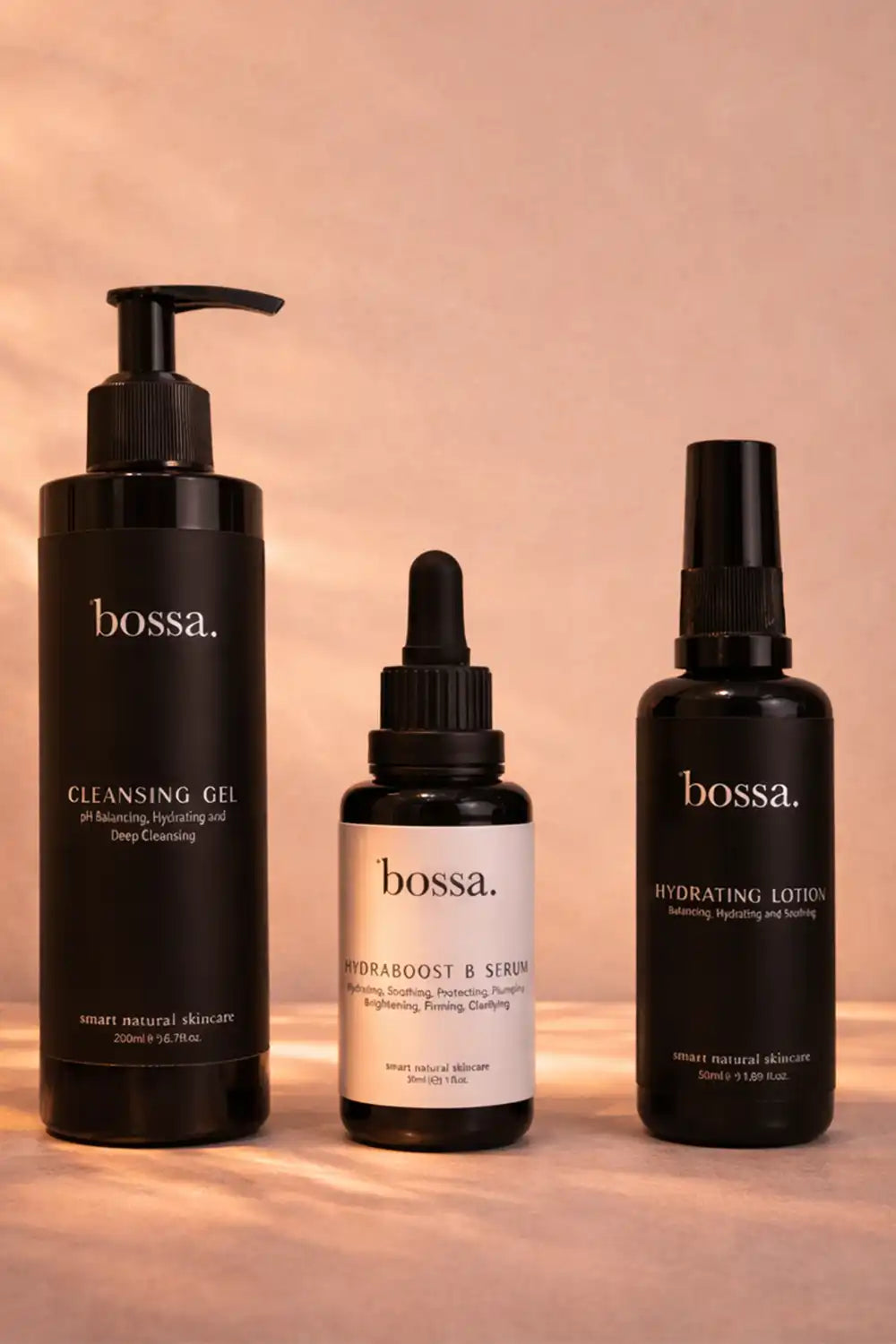
This philosophy sits at the heart of Bossa Skin.
Rather than building routines around endless steps, Bossa focuses on intelligent formulations designed to simplify skincare while supporting the biology of healthy skin.

The Routine That Skin Actually Recognises
In clinical practice, the most stable and healthy skin usually follows a routine that looks something like this:
Step 1: A Gentle Cleanse
Cleansing removes sweat, environmental pollutants, sunscreen, and excess oil.
But aggressive cleansing can strip the lipid barrier and disrupt the microbiome. The goal is to cleanse effectively without leaving the skin tight or dry.
Step 2: A Targeted Treatment
This is where active ingredients do their work.
A well-formulated serum can address hydration, pigmentation, oil balance, breakouts, or early signs of ageing while supporting the skin barrier.
Step 3: Barrier Support
A moisturiser reinforces the skin’s protective lipid layer and helps maintain hydration levels throughout the day or night.
When these steps are consistent, skin usually becomes more resilient over time.
And resilient skin is healthy skin.
Why Simplicity Requires Better Formulation
Minimalist skincare often gets misunderstood as “basic” skincare.
In reality, creating effective minimalist products is much more complex.
When a routine relies on only three or four products, each formula must perform exceptionally well.
- It needs to deliver results without irritation.
- It needs to support skin health long term.
- And it needs to work across different skin types and conditions.
This is where professional formulation and clinical experience become invaluable.
A dermal therapist understands how skin behaves not just in theory, but in real people with real concerns.
This perspective shapes the philosophy behind Bossa Skin: formulas designed to support healthy skin function first, while delivering visible improvements over time.

The Quiet Power of Doing Less
One of the most satisfying moments in clinic happens when a client simplifies their routine and begins to see their skin recover.
- Redness fades.
- Breakouts calm down.
- The skin texture becomes smoother and more balanced.
Not because of a miracle product.
But because the skin finally has space to do what it was designed to do.
This is the quiet power of smart skincare.
A thoughtful routine.
Well-designed formulas.
And the understanding that sometimes the most intelligent thing we can do for our skin…
is simply stop overcomplicating it.
In a skincare industry obsessed with adding more, smart skincare asks a different question.
What if better skin isn’t about doing more at all?
What if it’s about doing less, but doing it intelligently?